ACC Poona, 1971
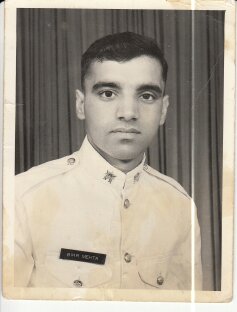
I landed one fine afternoon at Poona Railway Station in June 71 for reporting as directed, and took an auto to ACC (Army Cadet College), Ghorpuri. My spirits were high, filled with daydreams of the officer’s life ahead. Yet those dreams were quickly shattered. As soon as the auto left, we were greeted by a mustached gentleman—later commissioned in the Regiment of Artillery, a terror for all first‑termers(May God rest his soul in peace as he expired a few years back). All arriving cadets were made to crawl or do “front rolls” before being rolled into the ground and guided to our barracks. I was allotted to Guraiz Company,the other company was “Chushul”.
The first few days were horrific, and at times I wondered if I had landed in the wrong place. In our barrack were two Mohyal Brahmins—MK Bali and Ashwani Mohan(Chushul Company) —who were a term senior, and Jung Bahadur Mehta from our own batch in Guraiz company. They too ragged us with physical exercises: hanging from beams, endless push‑ups. Gruelling as it was, these exercises proved useful later in clearing physical tests.
Course and Academics
I was part of the 23rd ACC Course, the last of the 18‑month courses. From the 24th Course onward, cadets were to undergo a three‑year degree program with greater emphasis on academics, culminating in a degree. As usual, I was relatively strong in academics and took part in public speaking, including Hindi debates. ACC placed heavy weightage on academics, with PT, drill, sports, service subjects, and personality development forming the rest of the training.
Ragging and “Patti Parades”
Ragging was a daily ritual for first‑termers. ACC had an open‑air cinema where Hindi and English films were screened weekly. After the movie, once officers, families, and staff had left, cadets were made to crawl or front‑roll or do squatting and “Daddu Chals” (Frog jumping )all the way to the mess. After dinner, just as one prepared to sleep, there would be sudden calls to fall‑in—sometimes for an hour or more, changing into different rigs. These “Patti Parades” were exhausting, but they taught adaptability to emergency situations & physical and mental endurance.As a tradition the senior most batch was allowed to be ragged by the First termers in which few took Badla (revenge) of their earlier physical raggings while most of us ignored and just took it positively in their stride and I was amongst them.
Liberty and Life Outside
Cadets were granted liberty on Sundays, permitted to go out in shirt and tie (mufti dress), returning by evening. MG Road was the popular spot in Poona, frequented by ACC cadets, NDA cadets, and young officers from various military schools. Those who failed their drill test were denied out‑passes until they cleared it—I too was struck for two weeks under this clause. As it is there was hardly any populated area beyond Ghorpadi which was on the out skirts of the city on Kondhva Road.
Cash flow was limited, so outings were modest. Mid‑term breaks offered respite: we visited Goa once, as well as Sinhgarh Fort and picnic spots like Bhor Dam. Sunday mornings were often spent for Mandir Parades & in practical chores—clearing bed bugs with sunlight and hot water. Innovative methods were used for shaving: two blades with rubber insulation to heat water for early morning shaves.
Swimming Trials
ACC had a small swimming pool. I was a non‑swimmer, and during my first attempt I was asked to jump into the deep end—ten feet. I began drowning, shouting for help, until the PT instructor who was supervising the session jumped in and pulled me out. Later, under patient guidance from the instructor , I learned to float and swim. With time, I cleared the mandatory swimming tests, transforming a near‑disaster into a hard‑earned skill.
1971 War Clouds
As the first term neared its final weeks, Indo‑Pak tensions escalated and war seemed imminent. From the ACC training area we could see aircraft landing and taking off from Lohagaon Air Force Station—Super Constellations and Canberra bombers were frequent sights during November–December. Radio was our only mass medium besides newspapers. From ACC, Agha Khan’s Palace in Yerwada,where Mahatma Gandhi had been kept in 1942, was also visible in the distance.
On 3rd December 1971, we listened to the then Prime Minister Indira Gandhi’s speech on All India Radio, announcing Pakistani air strikes on Indian airfields and India’s retaliatory action. We were uncertain whether we would get the end‑of‑term break or be called back to our units. Eventually, we were granted leave and proceeded home by train. Western India was not heavily affected by the war, though train services were reduced.
We travelled in uniform in train and were honoured by citizens at every halt. I reached Jodhpur the next evening and offered my colleague Ghulam Mohammad Khan—later a famous equestrian and Asian Games medal winner—a night’s stay with us, as no transport was available to Nagaur,his home district.He left the next morning by bus.
Jodhpur itself was recovering from the tensions of war. Some areas on the outskirts had been targeted by Pakistani air strikes. Residents had dug air‑raid trenches near their homes, and total blackouts were enforced at night. The air‑raid siren installed on Ship House was distinctly heard across the town, which was then far smaller than the semi‑metro it has become today.
After spending about two weeks at home, I returned to Poona to begin the second term.
Reflection
ACC training instilled Officer‑Like Qualities (OLQ) and personality development. Some alumni chose to hide their ACC identity, but I remain proud to be a product of the college. In the third term, my room was shifted to another barrack, where I had two juniors from the 24th Regular Course—one a fine basketball player who later joined the ASC, the other commissioned into Artillery. I never met them again after leaving ACC.
After successful completion of ACC training and the Passing Out Parade, I reported to the Indian Military Academy in December 1972.

 Brij Mehta Diaries
Leave a comment