Delhi to Khanna
Returning from Delhi after an unsuccessful attempt at better academic environment felt like a setback, but Khanna offered me a second chance. My grandfather, determined to see me educated, took me to AS Higher Secondary School—the only secondary school and was located at the GT Road ‑Samrala Road junction. The headmaster, Mr. Madan Gopal, looked at me and dismissed me outright: “Eh nalayak hai, ida kuz nahin banega” (This boy is useless, he will not be successful anywhere). My grandfather’s persistence and humility finally secured my admission. That moment, though painful, became the foundation of my resolve to prove myself.
The Dilli Wala Tag
From the very first day, I was branded “Dilli wala.” Teachers and classmates alike used the tag, sometimes teasingly, sometimes affectionately. It reminded me constantly of my failed Delhi stint, but over time, I wore it as a badge of resilience. Khanna was not a consolation prize—it became the crucible where my personality and career began to take shape.
Learning Punjabi, Finding My Voice
Punjabi was compulsory, and I knew nothing of the language. While classmates recited grammar and literature, I struggled with the alphabet—Uda, Aada, Kakka, Ghagga. Giani ji, our Punjabi teacher, took me under his wing, patiently teaching me after hours. His dedication transformed my fear into confidence, and I eventually cleared Punjabi in the examinations. That triumph was more than academic—it was proof that persistence and mentorship could overcome any barrier.
Teachers, Thrashings, and Triumphs
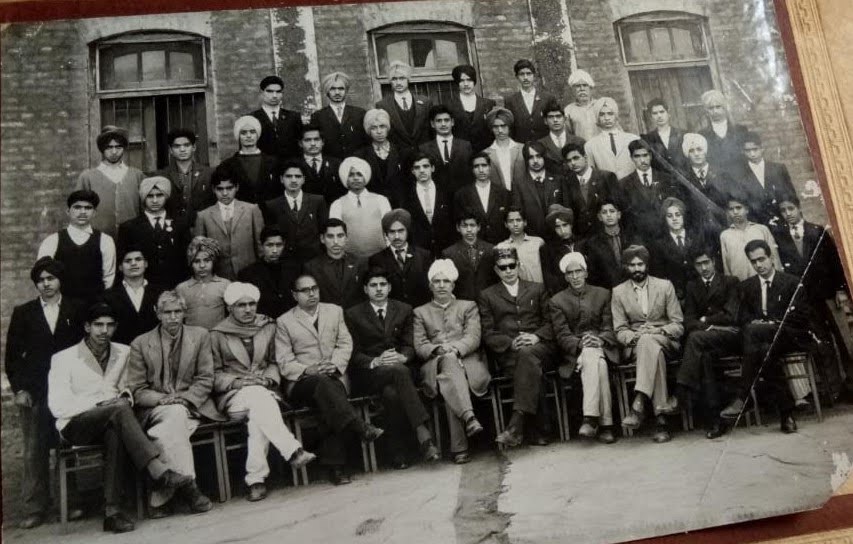
Group Photo of Higher Secondary Batch (1966-67) with Principal Shri Madan Gopal ji (Centre) & Shri Bata ji ,Shri Hardwari Lal ji & Shri Khullar (Sitting 2nd to fourth respectively). Me second row standing sixth from Left
Every teacher left an imprint. Bata ji, the math teacher, was feared for his daily thrashings. He seemed to sense weakness in a student’s body language and would not stop until exhausted. I escaped his wrath by sitting in the front row, though math remained my Achilles’ heel. Khullar ji, our science teacher, was the opposite—encouraging and insightful. I even took private tuitions from him, which sharpened my curiosity. Pandit Hardwari Lal ji, our Hindi teacher, reinforced the “Dilli wala” tag, but also nurtured my love for language. Together, they shaped my academic journey, balancing fear with inspiration.
Friendships and Family Bonds
My cousins Onkar and Ashwini (Gikku) were in my class, along with friends like Ish Kumar Dang and Sohan Lal. Ish became my closest companion. His family ran a wholesale edible oil business on Station Road, and I often studied with him at his house, especially math and science. My brothers Surender and Narender also studied at the same school, while my sisters attended Hindi Putri Pathshala. These bonds gave me a sense of belonging and support in Khanna.
Sports, Radio, and the Wider World
Sports became my passion. I followed tennis legend Ramesh Krishnan and football tournaments like the DCM and Durand Cups through radio commentaries and newspapers. Teams like Gurkha Brigade, BSF, Punjab Police, and JCT were my heroes. I even traveled to Delhi to watch a Durand Cup final—never imagining that decades later I would watch matches from VIP galleries as part of AIFF. At school, I played hockey and cricket, representing the school in inter‑school tournaments. My defensive batting technique frustrated coaches, but I valued resilience over flashy strokes. These early experiences sowed the seeds of my lifelong involvement in sports governance.
War Clouds
A Shirt, a Scar, and a Lesson
The 1965 war cast a shadow over our school days. From our classroom windows, we watched convoys of trucks, guns, and tanks rumbling down GT Road. Low‑flying aircraft roared overhead, and blackouts plunged the town into darkness at night. Citizens gathered at the town’s entrance to offer water, tea, and snacks to soldiers heading to the front. I joined NCC’s Air Wing, attended a camp in Chandigarh, and completed a St. John Ambulance first aid course. These experiences instilled discipline, patriotism, and a sense of service that stayed with me.
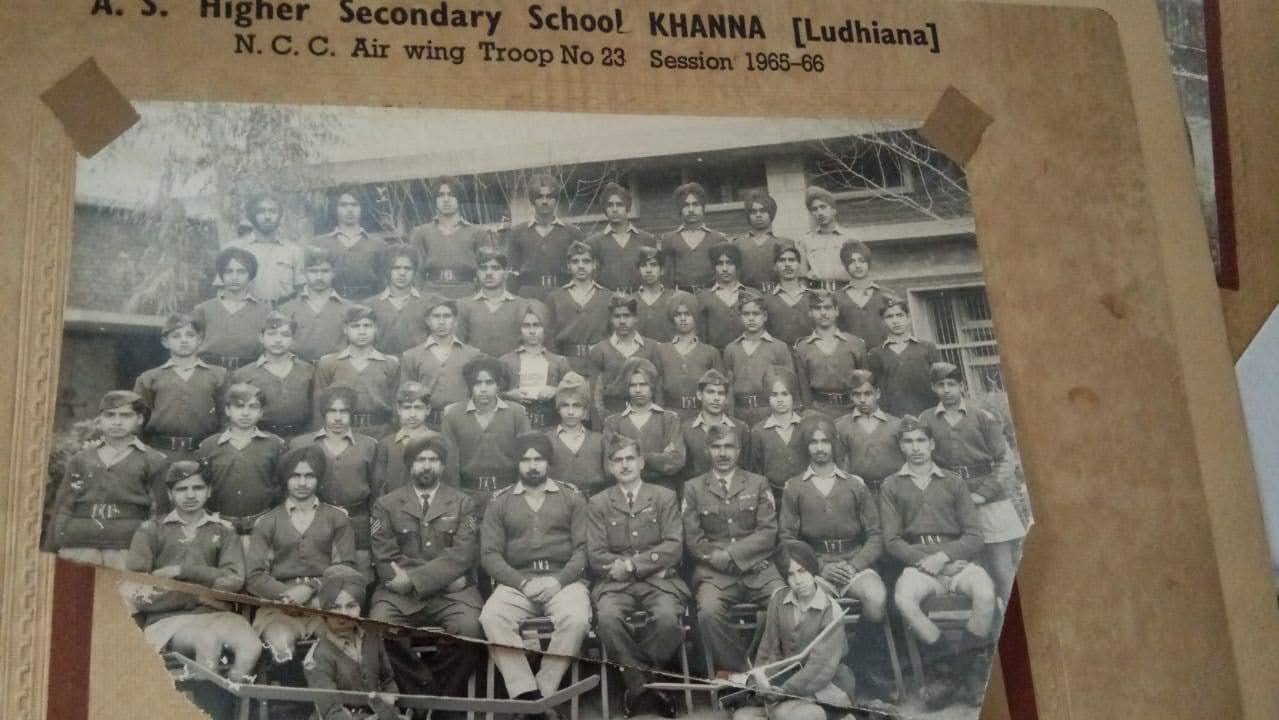
NCC Air Wing Troop No 23 Session 1965-66 Group Photo(Standing 3rd Row Fifth from Left)
In Class XI, I proudly wore my first terelene shirt to school. During a chemistry practical, acid spilled on it—deliberately or accidentally, no one admitted. The shirt was ruined, though I escaped injury. That incident taught me the fragility of possessions and the importance of resilience. The shirt was gone, but the lesson endured.
The Library Window to the World
The Municipal Library became my sanctuary. I devoured newspapers and periodicals, waiting eagerly for results and news. Punjab Kesri was the local favorite, while The Tribune carried our exam results. Delhi editions arrived late, but Soviet Land, with its glossy color photographs, was free and immensely popular. The newspaper vendor on Station Road, delivering papers by bicycle, was a symbol of dedication. Through these readings, Khanna opened a window to the wider world.
Reflections: Khanna as a Crucible
What began as a reluctant return from Delhi became the most formative chapter of my life. Khanna gave me teachers who believed in me, friends who stood by me, sports that fueled my passion, and a community that taught resilience in times of war. The “Dilli wala” who was once dismissed as useless found his voice, his confidence, and his path. Khanna was not just a town—it was the crucible where my personality and career were forged.


 Brij Mehta Diaries
Leave a comment